| |
|
 |
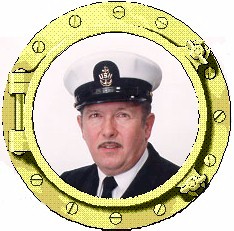
U.S.S. Allen M. Sumner DD-692 Founder's Corner with Senior Chief "Joe" Gall |
|
WASHINGTON (NNS) -- Master Chief Petty Officer of the Navy (MCPON)(SS/SW) Rick D. West released the following Chief Petty Officer birthday message to the fleet March 28.
"My fellow Chief Petty Officers, On April 1st, our entire mess will pause to celebrate 119 years of the United States Chief Petty Officer, our honored mess traditions and heritage, and look to our future. But we're not just celebrating another year of chiefs serving the Navy; we're celebrating everything it means to be the chief. Our anchors are the symbol of a culture and a way of life. Since 1893, Chiefs have been charged with the responsibility of ensuring our Sailors are the best in the world, ready to carry out our Navy's mission when our nation calls. We welcome that responsibility and lead by example with pride, character, and loyalty, a strong commitment to leadership, our core values, and the Navy ethos. Our Navy is the best it has ever been and we must continue to build upon the strong legacy that our mess was founded on as we look toward our future. 2012 is a significant year for us all as the United States Navy Memorial hosts the 'Year of the Chief.' The 'Year of the Chief' is a worldwide spotlight on the history and contributions of the Navy CPO mess. The 'Year of the Chief' will officially be launched on our birthday with a kick-off event held April 2 at the Navy Memorial. For more information on the 'Year of the Chief', visit Navy Memorial's web page. Happy birthday shipmates! I truly appreciate your leadership and the hard work you do every day. Anchor up and HOOYAH Navy Chiefs!"
NAVAL STATION GREAT LAKES CENTENNIAL
On June 14, 2011, over 3,000 Sailors will form up on historic
Ross Field in the shape of a “100” to pose for a photograph in order
to celebrate the Centennial of Naval Station Great Lakes. If you are
a current, former or retired American Sailor who served honorably in
any capacity at Naval Station Great Lakes, you are invited by the
commanding officer of Naval Station Great Lakes to play a part in
this historic photograph. Participants will assemble in the Visitors
Center parking lot next to Naval Station’s main gate at 610 Farragut
Ave., Great Lakes IL 60088on or before 9 a.m., June 14, 2011.
Uniform for Veterans: Summer white uniform, or an unadorned white
dress shirt, dark slacks and appropriate cover (American Legion hat,
ship’s ball cap, etc.). For veterans, by no later than 5 p.m. on May
20, 2011, email the following information to nsgl.pao@navy.mil, or
fill out this form and fax it to 847-688-4945, or mail it to:
NAVAL STATION GREAT LAKES
PUBLIC AFFAIRS OFFICE
2601E PAUL
JONES ST
GREAT LAKES IL 60088
Name (LAST, FIRST, MI):
When You Served in the United States Navy(DATE to DATE):
When You
Were Stationed at Great Lakes(DATE to DATE):
Your Vehicle
Information (Year, Make, Model, Plate Number/State):
Please bring
a copy of your DD-214 (discharge papers) and a state-issued ID card.
If you do not have your DD-214, you can easily obtain one from the
National Archives:
http://www.archives.gov/veterans/military-service-records/
Special from Master Chief Petty Officer of the Navy (SS/SW) Rick D. West
WASHINGTON (NNS) -- Master Chief Petty Officer of the Navy (MCPON)(SS/SW) Rick D. West released the following Chief Petty Officer birthday message to the Fleet March 28. "My fellow chief petty officers, On April 1st, our entire Mess will pause to celebrate 118 years of the United States Navy Chief Petty Officer, and we're not just celebrating another year of chiefs serving the Navy, we're celebrating everything it means to wear the fouled anchors we all cherish. Those anchors are the symbol of a culture and a way of life, representing character, loyalty, a strong commitment to leadership, our core values, and Navy ethos. Our anchors carry with them a responsibility to live up to the tradition of selfless service, while remembering our proud heritage that we've spent 118 years building as we look toward our future. Thank you Chiefs! Through your leadership of our Sailors, you continue to keep our heritage alive and our Navy strong — and as you know our Navy is the best it has ever been. Continue to make a positive impact on your command, your Sailors, yourself and our Mess. Remember those who have gone before us and those who have paid the ultimate sacrifice in service to our great nation. Happy birthday Shipmates! I truly appreciate your leadership and the hard work you do every day. Anchor Up and Hooyah Navy Chiefs!"
Army Staff Sgt. Salvatore Giunta will be the first living Medal of Honor recipient since the Vietnam War. On Thursday, President Obama spoke with Giunta, who is assigned to 2nd Battalion, 503rd Infantry Regiment, 173rd Airborne Brigade Combat Team, in Vicenza, Italy, to inform him that he will be awarded the nation’s highest valor award, according to the White House.
Giunta, 25, will be honored for his actions during a fierce firefight Oct. 25, 2007, in Afghanistan’s Korengal Valley. According to the White House announcement, when an insurgent force ambush split Giunta’s squad into two groups, he exposed himself to enemy fire to pull a comrade back to cover. Later, while engaging the enemy and attempting to link up with the rest of his squad, Giunta noticed two insurgents carrying away a fellow soldier. He immediately engaged the enemy, killing one and wounding the other, and provided medical aid to his wounded comrade while the rest of his squad caught up and provided security. His courage and leadership while under extreme enemy fire were integral to his platoon’s ability defeat an enemy ambush and recover a fellow American paratrooper from enemy hands, according to the White House. The Medal of Honor awarded to Giunta will be the eighth since the beginning of the wars in Iraq and Afghanistan. The seventh, also for actions in Afghanistan, was announced Thursday and will be awarded posthumously to Staff Sgt. Robert J. Miller. Miller, of 3rd Battalion, 3rd Special Forces Group of Fort Bragg, N.C., will be honored for his actions on Jan. 25, 2008. Obama will present the medal to Miller’s parents during a ceremony Oct. 6 at the White House. The first six Medals of Honor awarded for the wars in Iraq and Afghanistan were posthumous awards, including four for acts of heroism in Iraq and two in Afghanistan.
My name is Jonathan
Goldman, a former US Marine, and veteran of the Iraq War and I am
currently a website coordinator for three websites: Asbestos.net,
mesorc.com, BanAsbestosnow.com. The Website is a resource center for
knowledge and information about asbestos exposure and asbestos related
diseases like lung cancer and mesothelioma. In the past few months I
have personally developed pages of content that I believe that you and
your site visitors would find most useful and compelling. Our studies
suggest that over 1/3 of patients suffering from mesothelioma in this
country are veterans of the armed forces. And of those, victims within
the United States Navy are the highest number affected. With this is
mind I believe providing information regarding this serious disease
would seriously benefit you and your community.
The content designed
for veterans is located here:
http://www.asbestos.net/veterans/
http://www.mesorc.com/veterans-mesothelioma/
http://www.mesorc.com/banasbestosnow/
Starting late next year, chiefs and officers will have the opportunity to buy a more professional summer uniform for the office. Chief of Naval Operations Adm. Gary Roughead has approved the main design of the service dress khaki uniform, a World War II-style uniform that began development in 2006. The uniform — which will be optional and can be worn in place of the summer white uniform or the service khakis — sports a contemporary design that includes an unbelted waist and peaked lapels. The shirt will have a black tie and come in short- and long-sleeve versions. The uniform is largely the result of feedback from the fleet, including 125 wear-testers in six diverse locations, said Capt. Vince Drouillard, branch head within the Navy’s personnel, plans and policy division. “We really relied heavily on the testers,” he said, adding that preferences for look, styling and comfort drove most decisions. “This uniform will be designed well.”
Tricare for Life is not being eliminated
Marshall Hanson, Director of Legislation and Naval
Services, Reserve Officers Association
James Hamby wrote a piece for Military Times published this month entitled "Tricare Help: How will health care reform really affect your Tricare?" ROA has been trying to get the word out for a while that Tricare/Tricare for Life is NOT about to be eliminated. The Reserve Officers Association has been receiving a lot of calls and e-mails with concerns from retired ROA members that the proposed National Health care plan will deny them TRICARE or TRICARE For Life coverage. Anxiety has been increased by both public debate and viral e-mails that are reinforcing apprehension.At this moment there are no real concerns about there being a health care crisis. TRICARE is defined as an “acceptable coverage” satisfying certain requirements in the new health bill (H.R.3200) to exclude TRICARE from certain proposed taxes. Additionally, certain members in Congress are advocating on behalf of the military and military retirees. Rep. Joe Wilson (R-S.C.), ranking member on the House Armed Services personnel subcommittee, has gotten the House bill amended to insure that military families and retirees don’t have to “pay to play” and has gotten DoD exempted from certain employer requirements.“ The purpose of this amendment is to shield the men and women of our armed forces from onerous mandates and possible coverage deterioration as a result of this bill’s complex new health care governing scheme. Specifically, I believe we must exempt TRICARE from the “pay or play” employer mandate and other benefit mandates that would place an additional burden on this program that serves military personnel and their families,” said Rep. Wilson. The ranking member of the Veterans Affairs Committee, Rep. Steve Buyer (R-Ind.), got two amendments accepted by Rep. Henry Waxman (D-Calif.), chairman of the Energy and Commerce Committee. The amendments would allow veterans, military personal and their families to retain the choice of keeping their respective TRICARE and Department of Veteran Affairs (VA) health coverage and obtain additional private or public health insurance, and allow the Secretary of Defense and the Secretary of Veteran Affairs to continue to have sole authority over the respective health care systems. “Under the [original] health care plan, veterans would be subject to taxes because the VA health care plan would not have recognized as an acceptable health care plan,” shared Rep. Buyer. ROA and The Military Coalition has sent a letter to every member of Congress emphasizing “that the unique identity and role of the military TRICARE and VA health delivery systems – including their non-taxable status – are preserved under any national health plan that Congress may develop”. Some members have voiced apprehension that changes to Medicare will have changes to TRICARE and TRICARE for Life. One version of the bill would base provider fees on the Medicare fee scale plus 5 percent, which could stabilize what TRICARE can pay doctors. ROA is trying to further analyze to see what impact, if any, exists. Further, ROA is seeking dialogue with TRICARE contractors to ascertain their perspective on member concerns. The Association is working with 50 other associations, who will be proactive if problems arise.The rumors about TRICARE being axed resulted from a Congressional Budget Officer Report. For more see http://www.roa.org/site/DocServer/2009_TFL_CBO_Response.pdf?docID=18381
Three Vaccines Now Available at TRICARE Network
Pharmacies
Dec. 29, 2009
FALLS CHURCH, Va. – TRICARE beneficiaries can now receive select vaccines with no out-of-pocket expense at retail pharmacies. For the first time ever, beneficiaries can visit TRICARE retail network pharmacies to receive seasonal flu, H1N1 flu and pneumonia vaccines at no cost. This expanded coverage is available to all TRICARE beneficiaries eligible to use the TRICARE retail pharmacy benefit. See http://www.tricare.mil/pressroom/news.aspx?fid=581.
NEED A DD-214 FAST
The National Personnel Records Center has provided the following website for veterans to access their DD-214 online: http://vetrecs.archives.gov. This may be particularly helpful when a veteran needs a copy of his DD-214 for employment purposes. Do the paperwork online, sign the request and receive the information by return mail. For all other requests including requests from the next of kin of a veteran, contact the main URL as follows: http://www.archives.gov/facilities/mo/st_louis.html
Exposure to Agent Orange linked to prostate cancer in
Vietnam veterans
Public release date: 5-Aug-2008
Contact: Karen Finney
karen.finney@ucdmc.ucdavis.edu
REFERENCE: University of California Davis Health System
SACRAMENTO,
Calif.)( — UC Davis Cancer Center physicians today released results of
research showing that Vietnam War veterans exposed to Agent Orange have greatly
increased risks of prostate cancer and even greater risks of getting the most
aggressive form of the disease as compared to those who were not exposed. The
findings, which appear online now and will be published in the September 15
issue of the journal Cancer, are the first to link the herbicide with this form
of cancer. The research is also the first to utilize a large population of men
in their 60s and the prostate-specific antigen (PSA) test to screen for the
disease. "While others have linked Agent Orange to cancers such as
soft-tissue sarcomas, Hodgkin's disease and non-Hodgkin's lymphoma, there is
limited evidence so far associating it with prostate cancer," said Karim
Chamie, lead author of the study and resident physician with the UC Davis
Department of Urology and the VA Northern California Health Care System.
"Here we report on the largest study to date of Vietnam War veterans
exposed to Agent Orange and the incidence of
prostate cancer." Chamie also said that, unlike previous studies that
were either too small or conducted on men who were too young, patients in the
current study were entering their prime years for developing prostate cancer.
There was also the added advantage that it was conducted entirely during the era
of PSA screening,
providing a powerful tool for early diagnosis and tracking of prostate cancer.
More than 13,000 Vietnam veterans enrolled in the VA Northern California Health
Care System were stratified into two groups — exposed or not exposed to Agent
Orange between 1962 and 1971. Based on medical evaluations conducted between
1998 and 2006, the study revealed that twice as many men exposed to Agent Orange
were identified with prostate cancer. In addition, Agent Orange exposed men were
diagnosed two-and-a-half years younger and were nearly four times more likely to
present with metastatic disease. Other prostate cancer risk factors — race,
body-mass index and smoking — were not statistically different between the two
groups. "Our country's veterans deserve the best possible health
care, and this study clearly confirms that Agent Orange exposure during service
in Vietnam is associated with a higher risk of prostate cancer later in
life," said Ralph de Vere White, UC Davis Cancer Center director and a
study co-author. "Just as those with a family history of prostate cancer or
who are of African-American heritage are
screened more frequently, so too should men with Agent Orange exposure be given
priority consideration for all the screening and diagnostic tools we have at our
disposal in the hopes of early detection and treatment of this disease."
Now a banned chemical, Agent Orange is a combination of two synthetic compounds
known to be contaminated with the dioxin tetrachlorodibenzo-paradioxin (TCDD)
during the manufacturing process. Named for the color of the barrel in which it
was stored, Agent Orange was one of many broad-leaf defoliants used in Vietnam
to destroy dense forests in order to better visualize enemy activity. It
is estimated that more than 20 million gallons of the chemicals, also known as
"rainbow herbicides," were sprayed between 1962 and 1971,
contaminating both ground cover and ground troops. Most of the rainbow herbicide
used during this time was Agent Orange. In 1997, the International Agency for
Research on Cancer reclassified TCDD as a group 1 carcinogen, a classification
that includes arsenic, asbestos and gamma radiation. The study was funded
by the UC Davis Cancer Center. In addition to Chamie and De Vere White, study
authors were Bryan Volpp, associate chief of staff, clinical informatics, VA
Northern California Health Care System; Dennis Lee and Joonha Ok, UC Davis
resident physicians with the Department of Urology; and Lars Ellison who, at the
time the study was conducted, was an assistant professor with UC Davis and chief
of urology with the VA Northern California Health Care System. Ellison is now
affiliated with the Penobscot Bay Medical Center in Maine and a major in the
U.S. Army Reserve currently serving active duty in Iraq. A copy of the study can
be requested by emailing Amy Molnar at amolnar@wiley.com.
Prostate cancer is the second most common malignancy and the second leading
cause of cancer death in American men. It is estimated that there will be about
186,320 new cases of prostate cancer in the United States in 2008 and about
28,660 men will die of the disease this year. Designated by the National Cancer
Institute, UC Davis Cancer Center is leading the way in identifying the
molecular pathogenesis of carcinoma of the prostate, enhancing therapeutic
response and identifying chemoprevention. For more information; Visit: www.ucdmc.ucdavis.edu/cancer.
Our advice to every male who was in Vietnam, afloat or ashore, for whatever duration of time, go and have your doctor check your Prostate and seek a Prostate Specific Antigen (PSA) blood test at the same time. This will need to be done for the remainder of your life at three year intervals. No buts just do it!
PS. The term metastatic disease means that the cancer has spread beyond the prostate into bone, lung, liver. The prognosis in these cases is less than ideal; so we need to catch it earlier than this stage of development.
VA BURIAL BENEFIT UPDATE
Often survivors are disappointed when they seek reimbursement of burial expenses for departed veterans. This is because retirees have not informed their loved ones what to do and how much to expect in the event of their demise. You may be eligible for a VA burial allowance if:
• You paid for a veteran's burial or funeral ; AND,
• You have not been reimbursed by another government agency or some other source, such as the deceased veteran's employer; AND,
• The veteran was discharged under conditions other than dishonorable.
Following are the maximum benefits currently available from the VA:
• Burial Allowance (SC): VA will pay a burial allowance up to $2,000 if the veteran’s death is service-connected. In such cases, the person who bore the veteran’s burial expenses may claim reimbursement from VA. In some cases, VA will pay the cost of transporting the remains of a service-connected veteran to the nearest national cemetery with available gravesites. There is no time limit for filing reimbursement claims in service-connected death cases.
• Burial Allowance (NSC): VA will pay a $300 burial and funeral allowance for veterans who, at time of death, were entitled to receive pension or compensation or would have been entitled if they weren’t receiving military retirement pay.
Eligibility also may be established when death occurs in a VA facility, a VA-contracted nursing home or a state veterans nursing home. In non service-connected death cases, claims must be filed within two years after burial or cremation.
• Plot Allowance: VA will pay a $300 plot allowance when a veteran is buried in a cemetery not under U.S. government jurisdiction if: the veteran was discharged from active duty because of disability incurred or aggravated in the line of duty; the veteran was receiving compensation or pension or would have been if the veteran was not receiving military retired pay; or the veteran died in a VA facility.
The $300 plot allowance may be paid to the state for the cost of a plot or interment in a state-owned cemetery reserved solely for veteran burials if the veteran is buried without charge. Burial expenses paid by the deceased’s employer or a state agency will not be reimbursed.
• Headstones or markers: VA will provide headstones or markers to memorialize veterans or mark the graves of veterans buried in national, state, or private cemeteries as well as those whose remains have not been recovered or identified. This includes those buried at sea, those remains donated to science, and those cremated and whose cremated remains were scattered without burying any portion of them.
VA will also provide markers for eligible family members interred in a national or State Veteran's Cemetery. When interment is in a private cemetery, the cemetery may require, and charge for, a foundation for the marker and installation of the marker. Such costs must be paid from private funds.
• Flag: VA will provide an American flag, upon request, for covering the casket; and a memorial certificate, bearing the President's signature, expressing our Nation's grateful recognition of the deceased veteran's service.
• Other: In addition to VA burial benefits, the surviving spouse or eligible child of a veteran may be eligible for a $255 lump-sum death benefit from Social Security. Local Social Security Offices have details.
Source: VA Federal Benefits for Veterans & Dependents 2008 Edition http://www1.va.gov/opa/vadocs/fedben.pdf.
How to Contact the Veterans Disability Benefits Commission
The purpose of the Veterans' Disability Benefits
Commission is to carry out a study of the benefits under the laws of the United
States that are provided to compensate and assist veterans and their survivors
for disabilities and deaths attributable to military service, and to produce a
report on the study. The Commission is traveling around the
country to various cities getting input. They may not hit your town, but
if you have something you wish that they know, visit their website at http://www.vetscommission.org/index.htm
There you will find out exactly the input, and the message format they
need, and their e-mail address.
Tricare National Toll Free Numbers and websites
Senior Pharmacy Program 1.877.DOD.MEDS (1.877.363.6337) http://www.tricare.osd.mil/pharmacy/
TRICARE For Life 1.888.DOD.LIFE (1.888.363.5433) http://www.tricare.osd.mil/tfl/
or http://www.troa.org
(TFL Help Desk hours of operation are: Mon-Fri 7am
- 11pm, Sat 9am - 8pm, and Sun 10am - 5:30pm (all times EST)
TRICARE Prime Remote (TPR) (active duty and family members) 1.888.DOD.CARE
(1.888.363.2273) http://www.tricare.osd.mil/remote/
TRICARE Retiree Dental Plan - Deltal Dental 1.888.838.8737 http://www.tricare.osd.mil/tricare/beneficiary/supprog.html
or http://www.ddpdelta.org/
TRICARE Dental Program (TDP) - United Concordia 1.800.866.8499 http://www.tricare.osd.mil/tricare/beneficiary/supprog.html
or http://www.ucci.com/tdp/tdp.html
National Mail Order Pharmacy - Merck Medco 1.800.903.4680 http://www.tricare.osd.mil/pharmacy/
or http://www.merck-medco.com
Defense Enrollment Eligibility Reporting Systems (DEERS) 1.800.538.9552 http://www.tricare.osd.mil/DEERSAddress/
Active Duty Claims (MMSO) 1.800.876.1131 http://navymedicine.med.navy.mil/mmso/
TRICARE Claims Information http://www.tricare.osd.mil/claims/default.htm
Regional Toll Free Numbers
Northeast (1) 1.888.999.5195 http://www.tricare.osd.mil/regionalinfo/list.cfm?RegionID=1
or http://www.sierramilitary.com/
Mid-Atlantic (2) 1.800.931.9501 http://www.tricare.osd.mil/regionalinfo/list.cfm?RegionID=2
or http://www.humana-military.com/Region2/home.htm
Southeast (3) 1.800.444.5445 http://www.tricare.osd.mil/regionalinfo/list.cfm?RegionID=3
or http://www.humana-military.com/home.htm
Gulfsouth (4) 1.800.444.5445 http://www.tricare.osd.mil/regionalinfo/list.cfm?RegionID=4
or http://www.humana-military.com/home.htm
Heartland (5) 1.800.941.4501 http://www.tricare.osd.mil/regionalinfo/list.cfm?RegionID=5
or http://hmd.humana-military.com/region5/main.asp
Southwest (6) 1.800.406.2832 http://www.tricare.osd.mil/regionalinfo/list.cfm?RegionID=6
or http://www.hnfs.net/bene/bw1_0_bene_welcome.asp
Central (7/8) 1.888.874.9378 http://www.tricare.osd.mil/regionalinfo/list.cfm?RegionID=8
or http://www.triwest.com/
Southern California (9) 1.800.242.6788 http://www.tricare.osd.mil/regionalinfo/list.cfm?RegionID=9
or http://www.hnfs.net/bene/bw1_0_bene_welcome.asp
Golden Gate (10) 1.800.242.6788 http://www.tricare.osd.mil/regionalinfo/list.cfm?RegionID=10
or http://www.hnfs.net/bene/bw1_0_bene_welcome.asp
Northwest (11) 1.800.404.2042 http://www.tricare.osd.mil/regionalinfo/list.cfm?RegionID=11
or http://www.hnfs.net/bene/bw1_0_bene_welcome.asp
TRICARE Pacific; Alaska and Hawaii 1.800.242.6788 http://www.tricare.osd.mil/regionalinfo/list.cfm?RegionID=12
or http://www.hnfs.net/bene/bw1_0_bene_welcome.asp
WESTPAC 1.888.777.8343 http://www.tricare.osd.mil/regionalinfo/list.cfm?RegionID=15
or http://www.healthnetfederalservices.com/bene/bw1_0_bene_welcome.asp
Latin America & Canada 1.888.777.8343 http://www.tricare.osd.mil/regionalinfo/list.cfm?RegionID=16
Puerto Rico & Virgin Islands 1.888.777.8343 http://www.tricare.osd.mil/regionalinfo/list.cfm?RegionID=17
or
http://rooseyroads.med.navy.mil/
Europe 1.888.777.8343 http://www.tricare.osd.mil/regionalinfo/list.cfm?RegionID=13
or http://www.europe.tricare.osd.mil
NOTE: If you do not know which TRICARE region you're in, a map is
available online at http://www.tricare.osd.mil/regionalinfo/
TRICARE Web Site at http://www.tricare.osd.mil/main/tollfree.htm
Finding Lost Shipmates
If you have been looking for buddies or shipmates down through the years, here are some very helpful Web sites that may be of assistance to you all in finding that long lost buddy you have been searching for. These are excellent Web sites for that
purpose.
Veterans News and Information Service
http://www.vnis.com/
Requests For Military Mailing Addresses
http://www.defenselink.mil/faq/pis/PC04MLTR.html
National VETS Archives
http://www.vets.org/
Militarily Seeking
http://www.the-seeker.com/military.htm
VetsCom - Home of the VeteransAllianceServiceCenter
http://vets.com/